Quote:Michael Pollan is one of the world’s most influential science writers, known for his authoritative journalistic investigations into food, plants, and psychedelics. In his latest book, "A World Appears: A Journey Into Consciousness," he turns to the nature of consciousness by rigorously exploring the leading scientific theories in the field. In this interview, Pollan reflects on why he has come to doubt that materialism can fully account for consciousness, calling it “unproven or wrong,” and why he describes consciousness as “a labyrinth from which there is no exit.”
Great thanks to The Embassy Of The Free Mind for the beautiful recording location and personal tour: https://embassyofthefreemind.com/
'Historically, we may regard materialism as a system of dogma set up to combat orthodox dogma...Accordingly we find that, as ancient orthodoxies disintegrate, materialism more and more gives way to scepticism.'
I got value out of that interview. Michael is a talented author and Hans is a skilled interviewer. At times it came across a little as promotional (of the book), but that's fine. I like that Michael came away from his project concluding that materialism is not at all the invulnerable position that he thought it was. I also like that he involved himself personally in the journey, for example by meditating in an isolated cave for days, and by taking part in the "record your thoughts when the device beeps" experiment.
A few things are of concern to me:
Firstly, in listing the three basic positions on consciousness, from what I remember Michael itemised materialism, idealism, and panpsychism, without even a footnote to dualism.
Secondly, I noticed a conflation that I've become more and more aware of recently, and that is using "consciousness" to refer both to "phenomenal experience" as well as to "the experiencing (conscious) mind and its mental processes".
This is of concern to me because this conflation makes it easier to elide the existence of the self altogether and reduce it to a "sense of". This is another conflation of sorts, between the self proper and our self-concept.
Idealism, at least as conceived of by Essentia Foundation, performs both of these conflations, eliminating everything but phenomenal experience.
One thing materialism at least gets right, and in this respect, is the real existence of the self. What it gets wrong is conceiving of the self as made of inert, interchangeable matter.
Whatever the self is actually made of (or "made of"), it must be both inherently apt to experience as well as essential (in the opposite sense to "interchangeable").
This leads us to dualism. A different conception of matter might avoid the need for that conclusion, but empirical evidence - of the sort we discuss here on PQ - anyway compels it.
(2026-05-02, 06:11 PM)Laird Wrote: Firstly, in listing the three basic positions on consciousness, from what I remember Michael itemised materialism, idealism, and panpsychism, without even a footnote to dualism.
Because the consciousness part of Dualism perhaps just reduces down to Idealism. Dualism has little to actually say about consciousness ~ it seems to me to be about the interaction between consciousness and matter, rather than saying anything interesting about consciousness itself.
(2026-05-02, 06:11 PM)Laird Wrote: Secondly, I noticed a conflation that I've become more and more aware of recently, and that is using "consciousness" to refer both to "phenomenal experience" as well as to "the experiencing (conscious) mind and its mental processes".
Perhaps because mind and experience are very much tied together ~ you cannot meaningfully have one without the other, despite the distinction. We are merely aware of the distinction ~ but we still bound within that sphere.
(2026-05-02, 06:11 PM)Laird Wrote: This is of concern to me because this conflation makes it easier to elide the existence of the self altogether and reduce it to a "sense of". This is another conflation of sorts, between the self proper and our self-concept.
I do not see it as that, personally. The Self is rather unique in that it can known itself through reflection. The Self, as subject, needs mirrors, objects, to reflect upon itself and its self-existence. The Self in a void, without objects, cannot meaningfully exist, as there is no distinction. However, at the same times, these objects are not wholly separate from the Self. The Self only knows the phenomenal aspects of the noumenal objects-in-themselves, I dare say.
(2026-05-02, 06:11 PM)Laird Wrote: Idealism, at least as conceived of by Essentia Foundation, performs both of these conflations, eliminating everything but phenomenal experience.
This is a misunderstanding of Idealism. Phenomenal experience, by necessity, implies an experiencer, a subject, for whom these phenomena appear. Rather, the experiencer senses phenomena through many, various senses, by which the phenomena come out of noumena.
(2026-05-02, 06:11 PM)Laird Wrote: One thing materialism at least gets right, and in this respect, is the real existence of the self. What it gets wrong is conceiving of the self as made of inert, interchangeable matter.
Materialism must reject the existence of the Self to be even vaguely coherent, as Materialism says that only matter exists. The Self cannot exist as something material, as the Self has no material qualities to begin with. The Self is rather, in part, a non-physical "field" which binds and commands the matter composing the body, as a whole unit. That is how we experience our body, anyways.
(2026-05-02, 06:11 PM)Laird Wrote: Whatever the self is actually made of (or "made of"), it must be both inherently apt to experience as well as essential (in the opposite sense to "interchangeable").
Why does the Self have to be made of something? If the Self is essential, then it is not made of something else ~ that it is not reducible to something else, being irreducibly complex.
(2026-05-02, 06:11 PM)Laird Wrote: This leads us to dualism. A different conception of matter might avoid the need for that conclusion, but empirical evidence - of the sort we discuss here on PQ - anyway compels it.
Empirical evidence leads us to no metaphysics in particular. It compels no metaphysics, because everyone has their own metaphysics, being rationalized by the beliefs brought out of those metaphysical beliefs.
I do not think that the empirical evidence we have is sufficient to point to any explanation, because we simply lack too much information, too much knowledge, to draw any conclusion. With such limited senses and means to gather data, we will only ever draw incomplete and incorrect conclusions, much like the blind men and the elephant.
I have become comfortable accepting that I just don't know ~ but that has also leads me towards a vague combination of Neutral Monism, Transcendental Idealism, and Pluralism. Pluralism, because it is not clear to me anymore that there is only matter and mind, but much more, such as spirit, astral, and more.
But... if I had to define something, I would say that there is only essentially form and non-form, limitation and non-limitation. Form can only exist within non-form. Non-form is, well, limitless, holding potential for any and all qualities ~ form draws boundaries, and allows for specific sets of qualities to manifest.
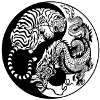
It is not Dualism, because finite form can only exist within the infinity of non-form. Taoism illustrates this nicely ~ there is firstly Heaven, but Heaven cannot be known or know itself in isolation, so there must naturally come Earth, by which Heaven comes into beingness by virtue of distinction. There is also Wuji, a state of nothingness prior to Taiji, which is equivalent to Heaven prior to Earth.
Thus, Wuji is Nothingness, Taiji is Oneness, Earth represents the Duality of Heaven and Earth as a pair, and so naturally follows are the Ten-Thousand Things, resulting from their union.
Thus, Taoism is, in essence, a cosmology of a Plurality within a Dualism within a Monism within a Non-Dualism.
(2026-05-02, 06:11 PM)Laird Wrote: That, really, sums up my answer to the implied question in the title of the Dualism or idealist monism as the best model for survival after death data thread: dualism, but idealist monism is anyway incoherent, at least where it reduces reality to experience alone.
Experience cannot exist without an experiencer who is the only entity that has experiences. Idealism makes no such claims, from my understanding.
“Everything that irritates us about others can lead us to an understanding of ourselves.”
~ Carl Jung
Reply
Reply
(This post was last modified: 2026-05-03, 06:22 AM by Valmar. Edited 1 time in total.)
1
The following 1 user Likes Valmar's post:1 user Likes Valmar's post • Sci
@Valmar, I've noticed over the years that you have a tendency towards reflexive gainsaying. In some contexts and with some people it seems to be less a tendency than a compulsion.
Sometimes, of course - i.e., when somebody really is wrong, misguided, or simply says something that deserves to be critiqued - gainsaying is appropriate. It's when it's not, and when it's compulsive, that it becomes problematic.
I invite you to consider which type of gainsaying your post above is engaged in by reflecting on the questionable value of its opening observation (paraphrased): that when one half of a dualism is removed, we're left with a monism.
I'm trying to be constructive here, so I settled on "questionable value" as the most generous and diplomatic description I could use there without being dishonest.
Rather, then, than responding to the content of your post, it seems more productive to put this two-part question to you:
What do you think drives this compulsion, and how do you think that you can overcome it?
Reply
Reply
(This post was last modified: 2026-05-04, 08:08 AM by Laird. Edited 2 times in total.
Edit Reason: Inserted a missing "a"; "what type" => "which type".
)
I am doing not such thing ~ but you believe I am. So as you are not even bothering to reply to my comment, but are attacking my motivations, I could ask the same of you. Why do you feel the need to believe that I am "gainsaying" when I know I have no such intention?
I do not discount Dualism ~ I just find it very incomplete on its own, and far too focused on a very narrow set of phenomena, of mind and matter, when my experiences have led me towards a Pluralism in regards to knowable ontological entities.
“Everything that irritates us about others can lead us to an understanding of ourselves.”
~ Carl Jung
Sadly, a response that was ironic in its reflexive gainsaying of the observation that you have a tendency to reflexively gainsay was all too predictable, so much so that I did explicitly predict it. Oh well, it was worth a try on the off-chance that you were willing to self-reflect.
(2026-05-04, 01:26 PM)Laird Wrote: Sadly, a response that was ironic in its reflexive gainsaying of the observation that you have a tendency to reflexively gainsay was all too predictable, so much so that I did explicitly predict it. Oh well, it was worth a try on the off-chance that you were willing to self-reflect.
As you were.
You are accusing me of "gainsaying" and then take my response as just further confirmation??????
Can you at least reply to my comment instead of making what appears to me to be an excuse not to...???
“Everything that irritates us about others can lead us to an understanding of ourselves.”
~ Carl Jung
I would have originally posted something like this if I hadn't decided it would be more productive to post what I did:
Quote:A general suggestion applicable here: when trying to correct as mistaken, or based on a misunderstanding, literally every point another poster makes, have the courtesy of correctly understanding and otherwise being correct yourself on at least one of those points.
Responding in kind to reflexive gainsaying that is mistaken or based on a misunderstanding is pointless because it simply leads to further reflexive gainsaying, which not only achieves nothing between us, but is also unedifying to onlookers. I know this from historical interactions with you.
(2026-05-04, 02:13 PM)Laird Wrote: It would be pointless.
You say this without even addressing any aspect of my comment.
(2026-05-04, 02:13 PM)Laird Wrote: A general suggestion applicable here: when trying to correct as mistaken, or based on a misunderstanding, literally every point another poster makes, have the courtesy of correctly understanding and otherwise being correct yourself on at least one of those points.
Where did I state or imply that every point was mistaken???
You assume that I am incorrect in my points, without even address what or how or why.
(2026-05-04, 02:13 PM)Laird Wrote: I would have originally posted something like this if I hadn't decided it would be more productive to post what I did:
???
(2026-05-04, 02:13 PM)Laird Wrote: Responding in kind to reflexive gainsaying that is mistaken or based on a misunderstanding is pointless because it simply leads to further reflexive gainsaying, which not only achieves nothing between us, but is also unedifying to onlookers. I know this from historical interactions with you.
How do I not read that like seemingly classic confirmation bias? You are seeing what you want to see, and so use that as justification to avoid actually addressing anything in my comment, only to then strawman it as being "reflexive gainsaying".
Which historical interactions are you even talking about?
“Everything that irritates us about others can lead us to an understanding of ourselves.”
~ Carl Jung

![[-]](https://psiencequest.net/forums/images/collapse.png)

 Mastodon