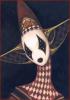
Paradox as ground: The shadows in the archetypes
River Kanies
I like the ideas in the essay but I feel the author doesn't really establish the fundamental nature of the Archetypes and instead rather assumes them.
From what I recall a lot of comparative mythology has seen criticism in recent years that would make me question the reality of archetypes. Even if we accept some of them - I think the Trickster figure shows up a lot - we have to ask is their a historical reason for this? A biological one?
This isn't to say I think the author is definitely wrong, just that I'd have appreciated a more detailed look at the claim that the archetypes are fundamental.
River Kanies
Quote: River Kanies argues that the paradoxical nature of psychological archetypes isn’t contingent, but reflect the very structure of experience: one where irresolvable tension is the impetus to action and the substance of meaning. The belief that an archetypal paradox can be resolved—that the tension between order and chaos, control and freedom, self and other can be finally settled in favor of one pole—is a failure to understand the nature of consciousness, he argues. It mistakes a structural feature for a solvable problem.
Quote:...Consider the tension between control and inspiration. We desire control because it provides security and predictability, yet it is precisely the uncontrolled, the unexpected, the open-ended, that generates meaning. Tighten control completely and you eliminate the very thing that made the endeavor worth controlling. Surrender it entirely and you lose the stable ground from which inspiration can be recognized and used. No deeper mathematical understanding is coming. This tension is not a puzzle awaiting a solution—it is a permanent structural feature of conscious experience.
What distinguishes a true paradox is not that we haven’t found the answer yet, but that the tension is generative: its resolution would be catastrophic, not clarifying. The same structure appears in every domain. Order requires chaos as its contrast and source of renewal. Self requires other to know itself. Peace requires the memory or possibility of conflict to be experienced as peace at all. These are not puzzles to be solved. They are the grammar of consciousness...
I like the ideas in the essay but I feel the author doesn't really establish the fundamental nature of the Archetypes and instead rather assumes them.
From what I recall a lot of comparative mythology has seen criticism in recent years that would make me question the reality of archetypes. Even if we accept some of them - I think the Trickster figure shows up a lot - we have to ask is their a historical reason for this? A biological one?
This isn't to say I think the author is definitely wrong, just that I'd have appreciated a more detailed look at the claim that the archetypes are fundamental.
'Historically, we may regard materialism as a system of dogma set up to combat orthodox dogma...Accordingly we find that, as ancient orthodoxies disintegrate, materialism more and more gives way to scepticism.'
- Bertrand Russell
- Bertrand Russell
![[-]](https://psiencequest.net/forums/images/collapse.png)
 Mastodon